Importing a used Chrysler PT Cruiser from the USA
USCar Trader operates as an independent broker for used vehicles.
 0049 (0)89 2000 791 00
 Mo - Fr 8:00am - 8:00pm
USCar Trader import service
Choose a specific vehicle. Where data is available, its detail page shows the import cost calculation. We assess any possible duty benefit with you before purchase.
Important: A 0% EU import-duty rate may be available for a vehicle covered by Regulation (EU) 2026/1455 that has US origin and is imported directly into the EU. CETA may apply to a vehicle with preferential Canadian origin. Whether the requirements are met is assessed for the individual case. Please contact us before purchase; we review the possible duty benefit and provide non-binding support through the process. Import VAT and other costs are assessed separately.
CarHub · Chrysler
The Chrysler PT Cruiser is a genuine period piece — a retro-styled compact that fused 1930s hot-rod cues with a practical, tall, van-like interior.
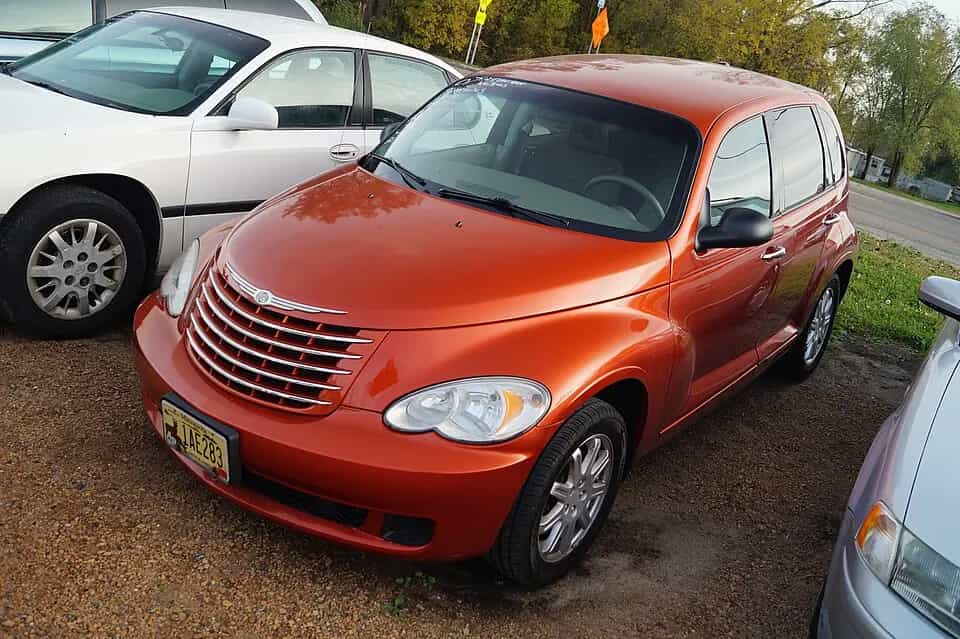
Model profile
USCar Trader operates as an independent broker for used vehicles.
The PT Cruiser ran essentially as one long generation from the 2001 to 2010 model years, with a significant facelift in 2006 that revised the front and rear styling, dashboard and interior materials.
Powertrain and equipment
Nearly all US PT Cruisers use a 2.4-litre inline-four. The naturally aspirated version makes around 150 hp; two turbocharged variants add pace — a standard turbo of roughly 180 hp and the high-output GT turbo of about 220 hp.
Body styles are the five-door tall wagon/hatch and, from 2005, the two-door convertible. US trims evolved over the years and included names such as Classic, Touring, Limited and the sporty GT, along with special editions like the Dream Cruiser and woodgrain-accented "Woodie" packages.
Vehicle selection
The PT Cruiser sold in very large numbers in the US, so the used pool is deep and inexpensive.
The PT Cruiser suits the buyer who loves its unmistakable retro styling and wants an affordable, practical modern classic that stands out.
Vehicle data
| Body styles | Typical figures (US-spec): 5-door tall wagon; 2-door convertible (2005+) |
|---|---|
| Length | Typical figures (US-spec): approx. 4.29 m |
| Seating | Typical figures (US-spec): 5 (wagon); 4 (convertible) |
| Kerb weight | Typical figures (US-spec): approx. 1,400–1,500 kg |
| Cargo | Typical figures (US-spec): Flat-folding/removable rear seats |
| Engine | Typical figures (US-spec): 2.4L inline-four (petrol) |
|---|---|
| Power (NA) | Typical figures (US-spec): approx. 150 hp |
| Power (turbo) | Typical figures (US-spec): approx. 180 hp |
| Power (GT turbo) | Typical figures (US-spec): approx. 220 hp |
| Transmission | Typical figures (US-spec): 5-speed manual or 4-speed automatic |
| Drivetrain | Typical figures (US-spec): Front-wheel drive |
| Fuel | Typical figures (US-spec): Petrol |
| Production years | Typical figures (US-spec): 2001–2010 (facelift 2006) |
|---|---|
| Country of assembly | Typical figures (US-spec): Mexico (Toluca) |
Values are reproduced verbatim from the existing article table. The documents for the specific vehicle govern.
Pre-purchase review
The 2.4 four is a durable engine but the PT Cruiser has a few well-known weak spots. Chief among them is that the 2.4 is an interference engine with a timing belt — confirm the belt and water pump have been changed on schedule, as a snapped belt causes serious damage. Turbo GT cars add wastegate and boost-control items to check.
Germany and Europe
US-market headlights use the FMVSS/SAE beam pattern, which differs from the ECE pattern required in the EU, so they may need adjustment or replacement with ECE-compliant units for registration.
USCar Trader services
As a buyer based in Germany, you do not have to inspect the vehicle yourself in the United States or Canada. Within the agreed scope, USCar Trader can coordinate document review, a separately commissioned on-site inspection and purchase processing.
Covered inspection points are agreed in advance. An on-site inspection records condition at the appointment and is not a guarantee.
Next step: Before commissioning, USCar Trader and the customer agree which document, history, inspection and transaction checks suit the vehicle and are included in the service. This records what was actually checked.
Import process
The assessment depends on the specific vehicle and the circumstances of the transaction. Please contact USCar Trader before purchase; we review any possible duty benefit and provide non-binding support. Import VAT and other costs are considered separately.
Questions and answers
No, not automatically. A 0% EU import-duty rate may be available for a vehicle covered by Regulation (EU) 2026/1455 that has US origin and is imported directly into the EU. CETA may apply to a vehicle with preferential Canadian origin. Whether the requirements are met is assessed for the individual case. Please contact USCar Trader before purchase; we review the possible duty benefit and provide non-binding support. Import VAT and other costs are assessed separately.
The naturally aspirated Touring/Limited wagon is the affordable, simple choice; the turbo GT and the convertible are the desirable enthusiast versions worth seeking out.
Yes. The 2.4 is an interference engine, so a neglected timing belt can cause major damage. Buy a car with documented belt-and-pump service or budget to do it immediately.
Yes, but a US import can bring specific trims, colours and the convertible or turbo GT that are far more common on the American market.
Typically several weeks from purchase to registration, driven mainly by ocean transit plus customs and TÜV on arrival.
Yes. The PT Cruiser sold in huge numbers, so mechanical parts are cheap and plentiful, best sourced from the US and increasingly available in Europe.
No. We are an independent broker. We import the specific used car you choose and charge for the service, with no dealer margin.
Available VIN, title and history information can be reviewed in the vehicle profile. USCar Trader can also arrange a separately booked on-site inspection within a scope agreed in advance.
More vehicles